
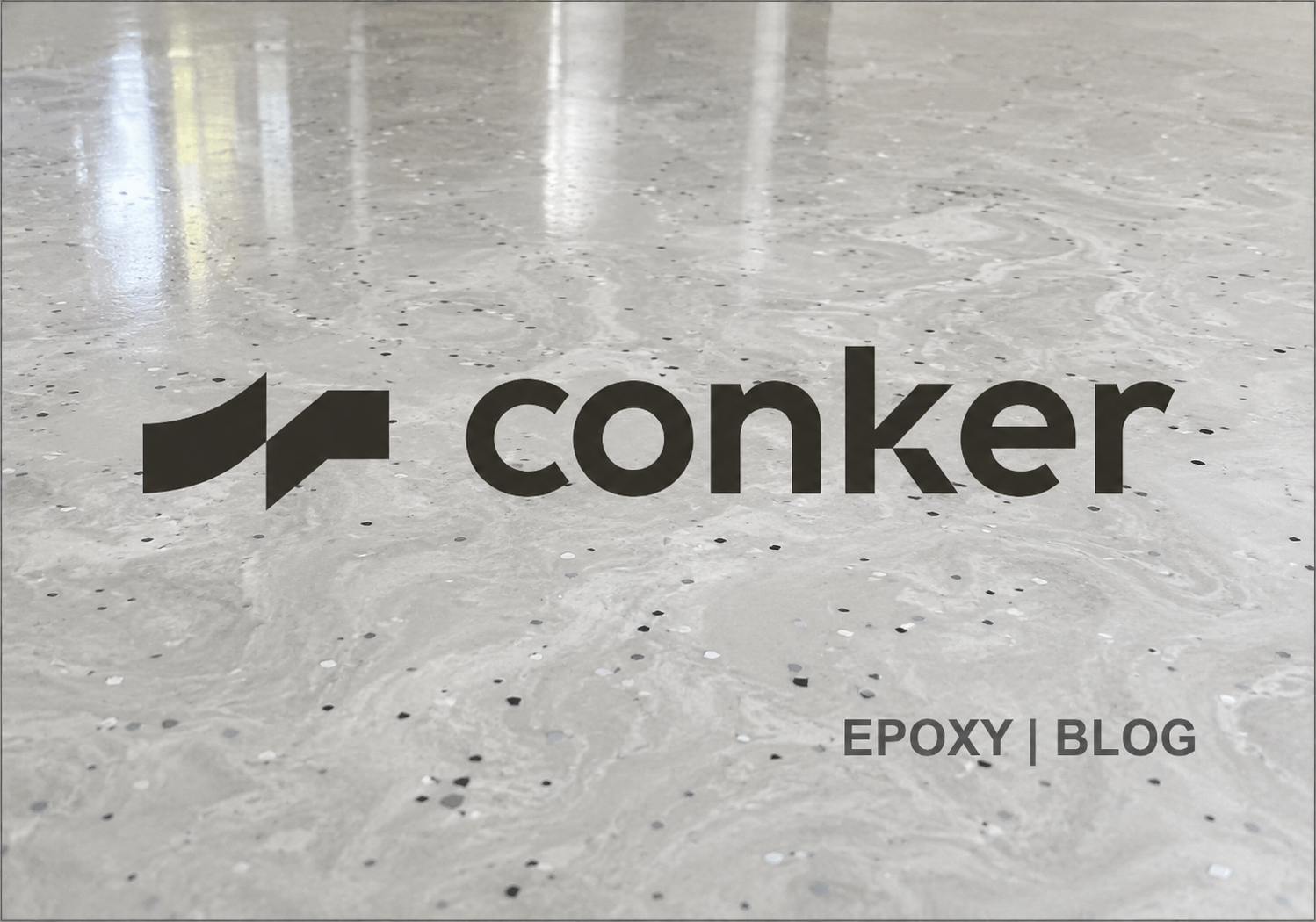
Epoxy Flooring Finishes Explained: A Practical Guide for Homeowners
When homeowners start researching epoxy flooring finishes, the first question is usually about colour.
Should it be grey?
Black?
Light or dark?
Flake or metallic?
While colour certainly matters, it rarely determines whether someone will be happy with their floor five years from now. Instead, the most important factor is often how the space will actually be used.
In our experience, that’s where the right flooring decision begins.
At Conker, we’ve found that the most successful epoxy flooring projects aren’t necessarily the most expensive or the most visually dramatic. Rather, they’re the ones that balance appearance, durability and practicality for everyday life.
With so many epoxy flooring finishes available today, understanding the strengths and limitations of each option can help you avoid costly mistakes and make a more confident decision.
The Best Epoxy Flooring Finishes Start With Preparation
Before discussing flakes, colours or metallic effects, it’s worth addressing the factor that has the biggest impact on long term performance.
Simply put, preparation matters more than anything else.
Many homeowners focus almost entirely on the visible finish. However, experienced installers know that surface preparation is what ultimately determines how well an epoxy floor performs over time.
Even premium products can struggle if they’re installed over poorly prepared concrete. Consequently, preparation is never an area where shortcuts should be taken.
For that reason, preparation typically includes:
- Mechanical grinding
- Moisture testing and management
- Crack repairs
- Surface remediation
- Thorough cleaning
- Profile preparation
Although preparation isn’t the exciting part of the project, it creates the foundation for everything that follows.
Ultimately, great epoxy flooring finishes begin with great preparation.
Why Flake Flooring Remains the Best All Round Choice
If we were selecting an epoxy floor for the average residential garage, flake flooring would almost always be our recommendation.
Importantly, the reason isn’t price.
Nor is it simplicity.
Instead, flake flooring consistently delivers the best combination of performance and aesthetics for most homeowners.
A typical flake floor consists of an epoxy base coat, decorative vinyl flakes and a protective topcoat. Together, these layers create a durable and attractive surface that performs exceptionally well in residential environments.
Additionally, decorative flakes help disguise dust, dirt and everyday wear, which means the floor often looks cleaner between washes.
Among its biggest advantages are:
- Excellent durability
- Improved slip resistance
- Easy maintenance
- Strong visual appeal
- Long term value
- Better concealment of dust and dirt
As a result, flake flooring remains one of the most popular epoxy flooring finishes available today.
Why More Homeowners Are Choosing Decorative Garage Floors
Many people still think a garage floor has one job.
Traditionally, that was true.
Today, however, many garages serve a much wider purpose.
For some families, the garage functions as a workshop. Meanwhile, others use it as a gym, hobby room, storage space or entertainment area.
In many homes, it serves several purposes at once.
Because of this shift, flooring has become an increasingly important part of the overall design.
Fortunately, flake flooring offers enormous flexibility. Homeowners can choose from hundreds of colour combinations ranging from subtle greys and charcoals through to bold custom blends.
Some prefer a timeless appearance that blends seamlessly with the rest of the home. On the other hand, others use the opportunity to create something far more distinctive.
Either approach can work beautifully when the finish matches the space.
Metallic Epoxy Flooring Creates a Completely Different Look
While flake flooring focuses on practicality, metallic epoxy flooring is all about visual impact.
In fact, few flooring systems attract attention quite like a well executed metallic floor.
Using specialised pigments suspended within the coating, metallic epoxy creates movement, depth and pattern variation across the surface.
As a result, the finished floor may resemble:
- Marble
- Flowing water
- Liquid metal
- Natural stone
- Abstract artwork
One of the most unique characteristics of metallic epoxy is that no two floors are ever identical.
That’s part of the appeal.
At the same time, it’s something homeowners should understand before making a decision.
Although installers can influence the movement of the pigments, the final effect develops naturally during installation.
Consequently, homeowners who appreciate one of a kind finishes often gravitate towards metallic systems.
Where Metallic Epoxy Flooring Makes the Most Sense
Not every space benefits from a highly decorative floor.
However, metallic epoxy can be spectacular in the right environment.
For example, we often see it used successfully in:
- Home bars
- Entertainment rooms
- Showrooms
- Vehicle collections
- Premium garages
- Man caves
In these settings, the floor becomes part of the overall experience rather than simply a functional surface.
By comparison, a typical family garage may gain more value from the practicality and forgiveness of a flake floor.
Neither option is inherently better. Instead, the right choice depends entirely on how the area will be used.
Solid Colour Epoxy Flooring Is Often Overlooked
Among the major epoxy flooring finishes, solid colour systems probably receive the least attention.
Nevertheless, that doesn’t mean they’re less effective.
In fact, they can be the ideal solution in certain environments.
Solid colour epoxy is commonly installed in:
- Workshops
- Warehouses
- Commercial facilities
- Industrial sites
- Mechanical workshops
- Storage facilities
The biggest consideration is visibility.
Without decorative flakes or patterning, solid colour floors reveal more of the slab beneath.
As a result, imperfections such as minor repairs, surface undulations or grind marks can be easier to see.
Ironically, the simplest looking finish often demands some of the highest preparation standards.
Therefore, slab condition becomes particularly important when considering a solid colour floor.
Choosing Between Light and Dark Epoxy Floors
Beyond selecting a finish type, homeowners also need to choose a colour direction.
Generally speaking, colour selection comes down to appearance and maintenance.
Dark Epoxy Floors
Dark greys, charcoal tones and black finishes typically:
- Hide dirt effectively
- Create strong contrast
- Deliver a premium appearance
- Suit contemporary homes
Furthermore, darker colours often complement modern architectural styles exceptionally well.
Light Epoxy Floors
By contrast, lighter greys, whites and neutral tones can:
- Reflect more natural light
- Make spaces feel larger
- Create a brighter environment
- Complement coastal design styles
The trade off is that tyre marks, dust and everyday dirt may become visible more quickly.
Nevertheless, many homeowners happily accept the additional maintenance because they prefer the brighter appearance.
Epoxy Flooring Works Well Beyond Residential Garages
Although garages remain the most common application, epoxy flooring has become increasingly popular across a wide range of commercial and industrial environments.
Today, enquiries regularly come from warehouses, workshops, storage facilities, body corporates and commercial operators.
In these settings, durability often becomes the primary objective.
Likewise, easy cleaning, chemical resistance, safety and longevity tend to matter more than decorative effects.
Accordingly, solid colour systems frequently become the preferred solution.
The Biggest Mistake People Make When Choosing Epoxy Flooring Finishes
One mistake appears more often than almost any other.
Choosing based solely on appearance.
A floor may look incredible in a photo.
Likewise, it may look stunning in a showroom.
However, neither of those things guarantees it will suit your space.
Instead, homeowners should evaluate traffic levels, maintenance expectations, slip resistance requirements, budget considerations and slab condition.
Once those factors are understood, the right finish usually becomes much easier to identify.
Which Epoxy Flooring Finish Would We Choose?
If you’re looking for a quick summary:
- For most residential garages, flake flooring remains the strongest all round option.
- Meanwhile, workshops often perform well with either flake flooring or solid colour systems.
- In commercial facilities and warehouses, solid colour epoxy frequently delivers the best practical outcome.
- By contrast, metallic epoxy flooring shines in feature spaces where visual impact is important.
Ultimately, there isn’t one perfect flooring system because different spaces have different requirements.
Final Thoughts
Every epoxy flooring finish offers its own advantages.
For most homeowners, flake flooring provides the strongest balance of durability, appearance and practicality.
Meanwhile, metallic epoxy delivers a level of creativity and uniqueness that few other flooring systems can match.
Commercial environments often lean towards solid colour systems because functionality tends to take priority over decorative effects.
Rather than chasing trends, focus on how the space will actually be used.
Once that question is answered, selecting the right finish becomes significantly easier.
At Conker, we take an assessment first approach to every flooring project. Sometimes that means recommending a premium decorative finish. Alternatively, it may mean suggesting a simpler system that better suits the space. Either way, our goal is to provide clear advice that helps homeowners make informed decisions with confidence.
Have a question or a topic you’d like us to cover? Email us at advice@conker.com.au.

